
by Justin Smith and Katharine Short
Out of the Attic
Recent revisionist histories have recovered neglected and marginalised accounts of women’s roles in the UK’s film and television industries, championed by a raft of UKRI-funded research from ‘Women’s Work and Working Women: A Longitudinal Study of Women Working in the British Film and Television Industries (1933-1989)’ to ‘Calling the Shots: Women and contemporary film culture in the UK, 2000-2015’ and ‘The Role of Class and Gender politics on Working-Class Women’s position in the UK Factual Television Industry’. New archival sources have proved as valuable as oral histories in informing such studies. Yet official archives (like the BBC’s Written Archives Centre, Caversham) prove disappointingly patchy when it comes to researching anything as recent as post-1980. For the Beeb, it seems, history really begins beyond the half-century mark. And in the digital era, that’s a problem that will only get worse; emails and texts aren’t archived as assiduously as the letters and memos of yesteryear.
Despite all this, at De Montfort University, we’ve found that tried and tested sources (the contents of attics, the catalyst of house moves) often still yield the best results. Five brief examples serve to illustrate the riches of our Kimberlin Library’s Special Collections.
Anita Anand
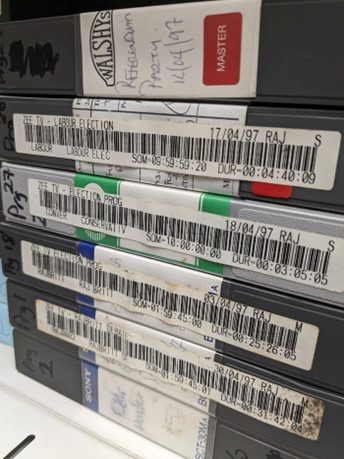
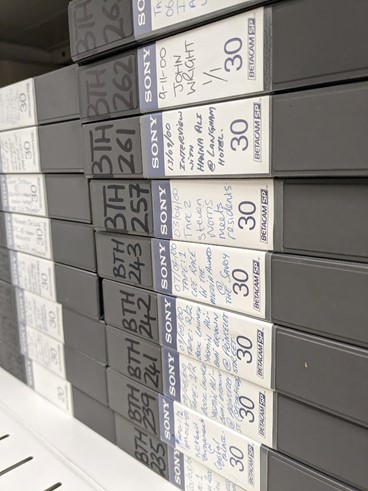
Writer and broadcaster Anita Anand, currently best known for helming BBC Radio 4’s Saturday phone-in Any Answers, began her career in journalism with the fledging satellite channel Zee-TV when it established its European operation in 1995. Having graduated from King’s College London and trained as a journalist, Anand became Head of News and Current affairs at Zee TV Europe at the age of 25 (making her one of the youngest TV news editors in Britain), working for the satellite broadcaster between 1995 and 2004. Anand fronted the current affairs talk show The Big Debate and was a political correspondent for Zee TV, presenting the Raj Britannia series – 31 documentaries chronicling the political aspirations of South Asian communities across marginal constituencies in the run-up to the 1997 General Election. Anand’s cutting-edge journalism exposed the major political parties’ neglect of the South Asian vote. It was a watershed moment that launched her career. The Anita Anand (Zee TV) Collection comprises over 60 linear metres of Betacam tapes, which can be viewed on-site, including footage filmed for current affairs show Behind the Headlines, the Raj Britannia series and The A-List, interviews with Asian celebrities and business-people.
Sue Birtwistle
Sue Birtwistle (Lady Eyre) has produced a raft of award-winning television dramas since the early 1980s. She began a long and fruitful creative partnership with the screenwriter Andrew Davies (whose student she had been at Coventry College of Education) by bringing his children’s character Marmalade Atkins (1982-3) to ITV. Two films directed by Giles Foster followed this: Dutch Girls (1985), written by William Boyd, and Hotel du Lac (1986), which was adapted from Anita Brookner’s Booker Prize-winning novel. Birtwistle then produced Boyd’s adaptation of Evelyn Waugh’s Scoop (1987). In the same year, she made a film of Tony Harrison’s bleak, declamatory poem V for Channel 4, directed by her husband Richard Eyre. More Andrew Davies collaborations followed: Ball-Trap on the Cote Sauvage (1989) and Anna Lee: Headcase (1993). But it was in 1995 that Birtwistle found her métier in classic drama, producing Davies’s adaptations of Pride and Prejudice (1995), Emma (1996) and Elizabeth Gaskell’s Wives and Daughters (1999) and Cranford (2007-2009). Sue Birtwistle’s papers at DMU include correspondence and notes, press cuttings and publicity materials, scripts and DVDs, and notable publications including (with Susie Conklin) The Making of Pride and Prejudice (1995) and The Making of Emma (1996).

Suzanne Davies (1938-2022)
Suzanne Davies was a BBC producer, director, researcher, and vocal feminist activist. During her career, which spanned from the mid-1960s until the 2010s, she produced a wide range of television series, including Women in Work (1972), Women in the Eighties (1981), Through the Looking Glass (1987-9), and BBC Education ‘making of’ documentaries to accompany adaptations of Middlemarch (1994) and Great Expectations (2011).
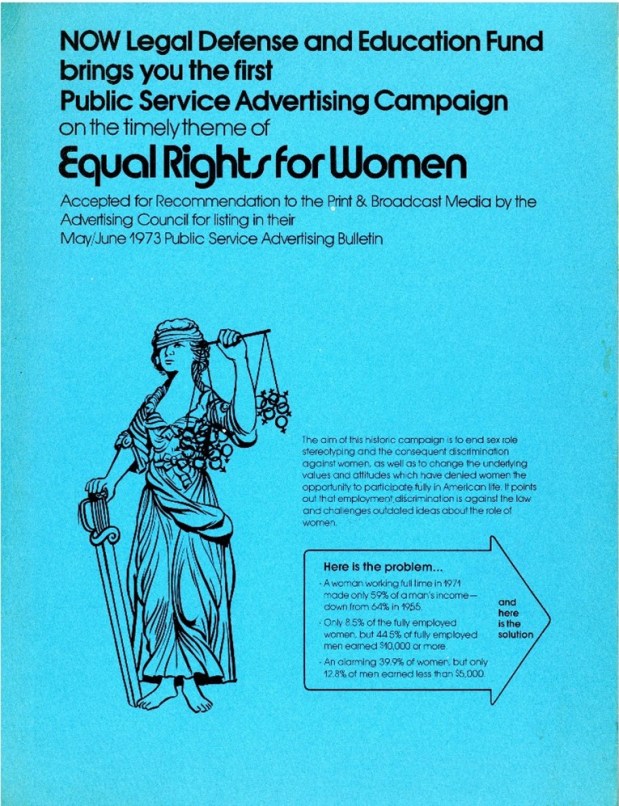
During her early career, in the 1960s and 70s, the BBC was heavily male-dominated and – in her view – highly sexist. Very few women were producers or directors, while comparatively few were editors or researchers. Davies herself was frequently mistaken for being a secretary, while she was often treated patronisingly by senior male colleagues. In Davies’s own words, ‘the culture in the BBC was male and sexist. You cannot imagine how much so unless you were a woman there at the time.’ In this context, Davies was determined to advance equal representation of women in broadcasting, both on and behind the screen, while campaigning for gender equality in society more broadly.
Women in Work (1972), the first television series she researched, produced and directed, was a great success. It was followed by A Woman’s Place (1977-8), A Child’s Place (1978-9), Women in the Eighties (1981), Well Woman (1982-3), and Hidden Assets (1993). Besides programmes about women, Davies’s career encompassed many other BBC productions, including a wide variety of documentary series. Among these are Past at Work (1979), featuring subjects such as the history of steam trains, canals and the textile industry; Artists in Print (1980), about printmaking; House and Home (1984-6), about the history of the small English house; You in Mind (1986-7), about mental health; and Through the Looking Glass (1987-9), about the social history of dress.
In the 1970s, Davies also began campaigning actively to advance women in broadcasting. In 1972, she joined Women in Media (WIM), a group of highly successful women journalists and broadcasters, describing this as the best thing she ever did for herself in television. The WIM was hugely effective in creating publicity and lobbying women’s organisations; among other things, it was instrumental in bringing about the Sex Discrimination Act (1975). Davies was also involved in other important groups, being a founding member of Women in the BBC (late 1970s) and the Women’s Broadcasting and Film Lobby (1979/80), as well as a board member of Women in Film and Television (founded in 1989). Through these groups, she helped change attitudes towards women in broadcasting and the BBC, specifically, challenging male dominance of the industry. In addition, she contributed to addressing practical obstacles hindering women’s progress – particularly in relation to childcare provision. For example, she campaigned successfully to open a crèche at the BBC.
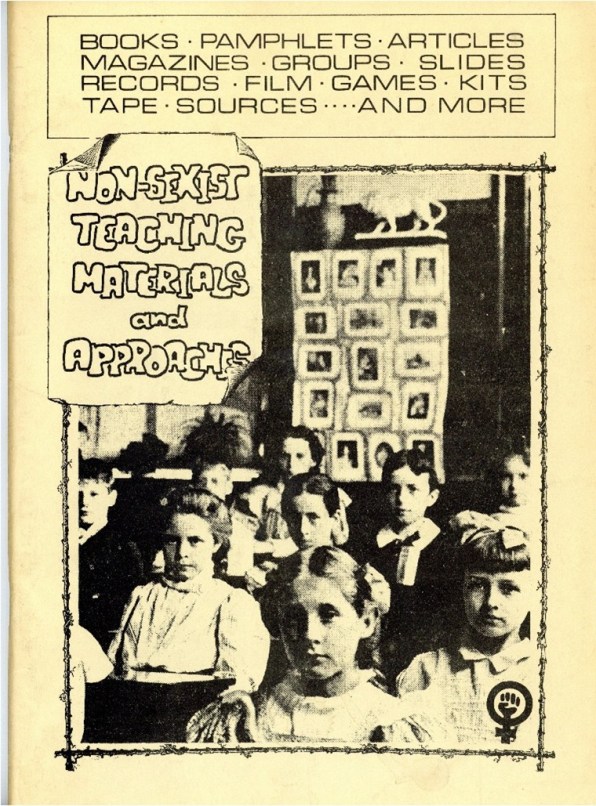
Davies’ papers at DMU Special Collections include research and production notes, campaigning papers for different organisations, including Women in Media, the Women’s Broadcasting and Film Lobby and Women in Film and Television, and papers relating to Davies’ career, including a 7-page document she wrote entitled ‘Being a Woman in the BBC: 1965-94’.
Angie Mason
Angie Mason was a teacher of French and English at Chester Grammar School and City University in London before joining the ITV Schools department in 1980. Two years later, she was approached by BBC Education, where she worked for the next twenty years. She became the Senior Education Officer in charge of Policy, working very closely with producers and the head of the department, Marilyn Wheatcroft. After a brief stint producing Arts programmes for the BBC World Service, Mason returned to BBC Education in the early 1990s as Head of Educational Developments with a budget and team to produce ‘wrap-around’ resources for general audiences as well as dedicated materials for schools and colleges in an initiative that became known as 360-degree programming. Mason’s team produced materials for a wide range of television and radio programmes but specialised in viewer’s guides and ‘making-of’ documentaries inspired by the renaissance of BBC Drama’s classic serial and sell-through teacher’s packs (with VHS, audio tape and resource booklet elements). The titles in Mason’s archive at DMU Special Collections include: Martin Chuzzlewit, Hard Times and Middlemarch (all 1994), Edith Wharton’s The Buccaneers (1995), Pride and Prejudice (1995), Our Mutual Friend (1998), Great Expectations and David Copperfield (1999) and Love in a Cold Climate (2001). But Mason’s work at BBC Education also embraced an eclectic mix of other paratexts, including: The Routes of English, Spinning with the Brain, Inside The Lost World and The Story of Only Fools and Horses!

Mina Patria
Mina Patria worked at BBC Education between 1995 and 2002, acting as Publishing Manager for a range of booklets and activity packs to accompany BBC television series, including some of those produced by Angie Mason. She writes: ‘My role as Publisher at the BBC was to take the viewers beyond the broadcast. This was achieved by further stimulating viewers’ passive interest in programmes through print, online content, events and a whole host of media-rich activities and experiences. To enable this to happen, part of my role was also to develop and manage an in-house publishing team, commission external creatives and create innovative products to meet the needs of viewers, sponsors, programme-makers and other stakeholders.’
Her small collection comprises copies of educational resources Patria worked on at BBC Education, including accompaniments to Painting the World (1994), Pride and Prejudice (1995), Read and Write Together (1998), Local Heroes (1998), Techno Games robot building kit (2000), Count Me In (2000), and Genetics and You (2002).

Consulting the Collections
All five collections discussed above are accessible at De Montfort University Special Collections, Leicester. For more information, please get in touch with archives@dmu.ac.uk, consult our website: https://library.dmu.ac.uk/specialcollections, or browse our Cinema and Television related catalogues: Collections about Cinema and Television (epexio.com)
Katharine Short (Special Collections Manager)
Justin Smith (Professor of Cinema and Television History)
 WFTHN
WFTHN 