by Melody Bridges
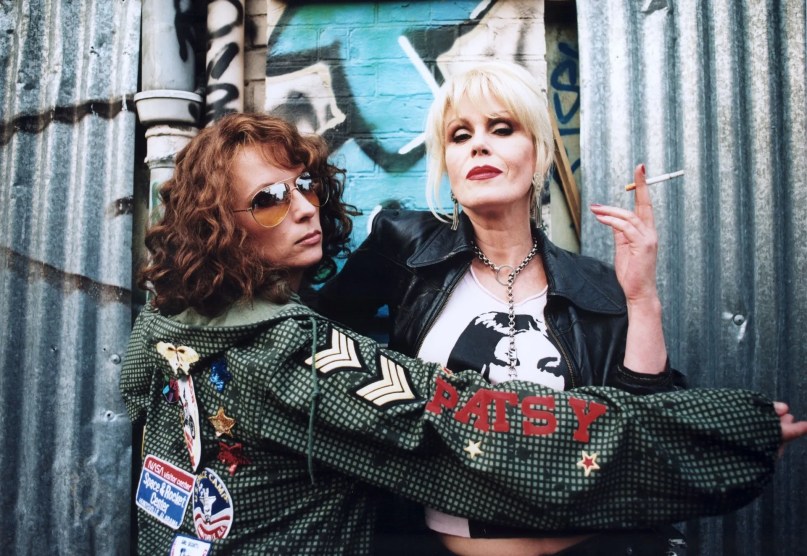
A pivotal TV moment of my 1990s viewing experience was from Absolutely Fabulous (BBC2, 1992; BBC One, 1994–2012). Edina Monsoon falling out of a taxi bottom first on the road was unexpected and hilarious (apparently inspired by Jennifer Saunders partying with Bananarama). I couldn’t believe it! Here were these women – Edina and Patsy – living life large. It was as opposite as possible from my button-up girls’ school experience. It was so refreshing to see that women could be enjoying their lives – laughing and being raucous –and crucially taking up space.
Now a quarter of the way into the 21st century and we’re seeing more female driven stories, and arguably a wider variety of women than ever before. Perhaps the wider cultural landscape has in part shifted due to the hard work of the Geena Davis Institute (‘If she can see it, she can be it’) and the talk so impassionedly delivered by Geena Davis in London (in 2015) demanding equity for women on screen – ‘We want to see women with bigger roles… more lines…. With more… more clothes!’
I am delighted to write a review about a new and exciting book about female authorship, which fills a gap and celebrates women’s work as well as conferring on it the respect that academic writing does. Countless critics and authors venerate the great male writers and thinkers as genius. We need more writers to write about women writers and reclaim that space for women as geniuses in their own standing. Step forward author, Laura Minor, who has set herself the task of compiling, scrutinizing and celebrating female authorship in UK television.
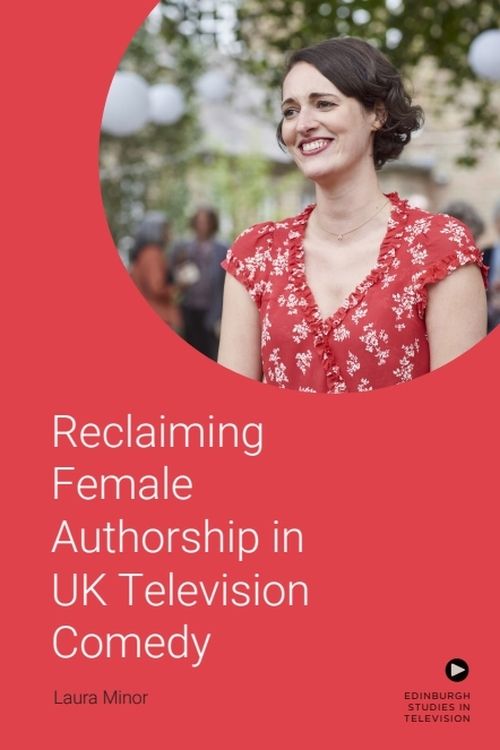
Reclaiming Female Authorship in UK Television Comedy by Laura Minor
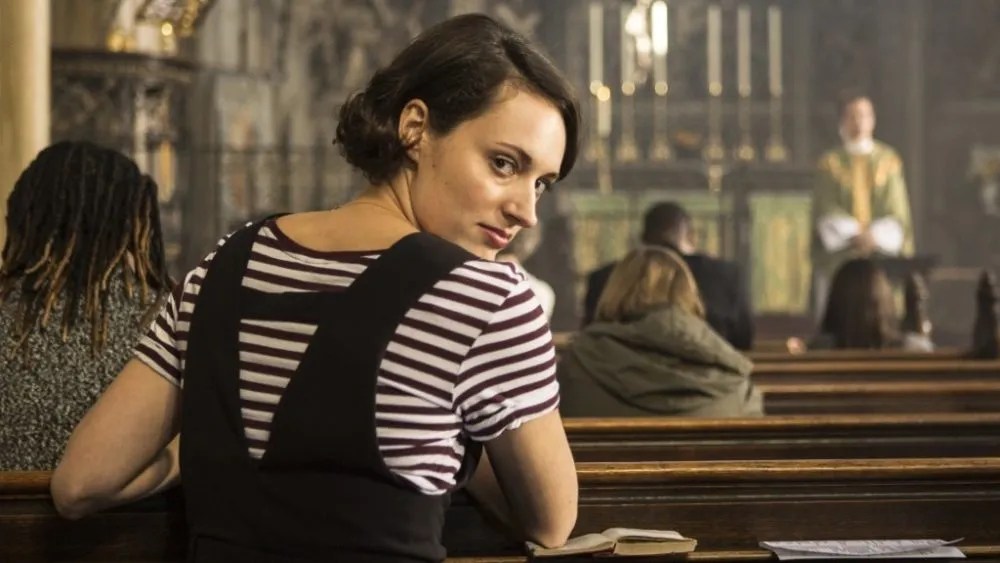
The very title – Reclaiming – just like the countless marches I went on at university in the late 90s to ‘reclaim the streets’ (‘Whose streets?’ ‘Our streets!’) are about taking up the space – allowing women’s voices to resound and resonate not just on our television screens, but also in our minds and imaginations, and in our cultural expressions and language. The great success of, for example, Fleabag (BBC Three, 2016; BBC One, 2019) – at once a put down, and a reclaiming of an arguably unpleasant nickname for the writer Phoebe Waller-Bride – put women’s writing and voices right at the heart of the television conversation. Success for Fleabag both the writer and the tv show seemed unstoppable, as it was widely lauded a huge success and fans included (perhaps somewhat ironically considering Fleabag’s own – ahem – strong feelings about him) Barack Obama.
Perhaps the only part where I may not agree with Minor is her explanation of the term ‘fastidious’ which she uses several times for creative women. I don’t ever like to pile on the negatives on women when there is already a huge culture of misogyny and we need to all pull together like galley slaves in the other direction. Although I understand that she is trying to use it as a positive acknowledgement of creative women’s attention to detail – I’m not sure about it because it seems close to calling women ‘fussy’.
In her excellent introduction, Minor explains that women’s work is never on its own in a vacuum but always a product of the challenges of the time – racism and sexism are some examples. The patriarchal odds were stacked against Fleabag even existing, which is why it feels so liberating to watch. Phoebe Waller-Bridge gives voice to so many of the characters (and by reflection women’s) secret thoughts and fears – we marvel that it exists at all. (Quickly form a cordon around Phoebe Waller-Bridge – we need to preserve her!)

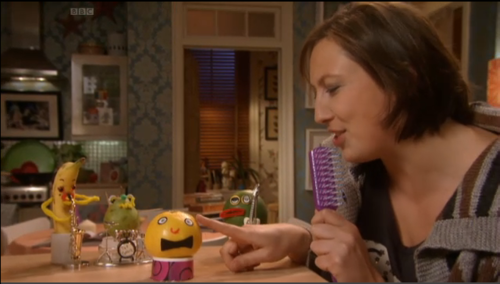
Comedy has helped to change the baseline of what is deemed acceptable for women’s behaviour. (I’m thinking of Miranda Hart in her show, Miranda (BBC Two, 2009-2010; BBC One, 2012-2015) drinking , dancing, losing her skirt…). Minor refers to the Charlie Chaplin as a ‘relentless perfectist’ (as was Gene Kelly, Fred Astaire) and I understand why she puts Lucille Ball in the same category as a ‘fastidious perfectionist’. Ball makes her scenes look so natural but it took hours of rehearsal for those slapstick scenes to work. (Perhaps my favourite might be the one where she gets a job in a chocolate factory and due to a fast running conveyer belt hilarity ensues).
The author recognizes that the majority of successful women writers/disruptors (my word) are white other than Michaela Coel; ‘the women analysed throughout this book are white, which points to the lack of women of colour who have been allowed to reach levels of celebrity/stardom in TV (comedy)’ (p.15). Minor acknowledges the problems of whose star gets to rise in our televisual universe. Whilst also trying to make sure that she has a named and explained the key players that she wants to celebrate with weighty chapters on the work of Julia Davis, Phoebe Waller-Bridge, Caitlin and Caroline Moran, Michaela Coel, and Sharon Hogan.
Minor refers to Kira Cochrane, 2014 book All the Rebel Women which ‘interviews UK based feminist activists and concludes that fourth wave feminism can be characterized by four key points: challenging rape culture, technology, inclusion/intersectionality and humour’(p.17). Humour is a key weapon here in the fight for equality and talking about who and how it is wielded is empowering. There has been a disturbing growth in violence against women since the 2010s despite (because?) of MeToo, the highlighting of rape culture and the growth of online pornography and misogyny. The incredible bravery of Gisele Pelicot who waived her right to anonymity helps us all to reframe the shame – ‘it is on them’. (i.e. perpetrators of violence).
Laughter and having the strength to laugh is seen as an act of might in itself and I was delighted to be reminded by Minor about the hilarious and disturbing Julia Davis pilot episode for Lizzie and Sarah (BBC, 2010). If you haven’t seen this then stop everything you’re doing right now and watch it.
Minor, reminds us to not to forget the many funny and fabulous women who have come before, including but not limited to Victoria Wood, Jo Brand, Jenny Éclair, Victoria Wood, French and Saunders, and Helen Lederer: ‘While Andy Medhurst argues that ‘popular cultural history has been much more forgetful about funny women than funny men’ this book will not let this happen again.’ Perhaps this is not so much a book as a call to arms. Person the barricades! Let’s fight for the funny.
She may be called Laura Minor – but this is a major piece of research and one that deserves a wide audience and readership.
Melody Bridges studied English and Drama at Cambridge University where she performed with the Footlights. She is an award-winning writer-director with experience in theatre, television and film. She has directed televisions series and stage plays and has written for both stage and screen. In addition to contributing a chapter to ‘Celluloid Ceiling: women film directors breaking through’, she is the co-editor of the acclaimed non-fiction book, ‘Silent Women: Pioneers of Cinema’. She has delivered a talk at TedEx about inspiring creative change, written several articles for a number of publications, and founded an arts festival. Bridges continues to write, teach and lecture regularly, and has a particular interest in women in film.
 WFTHN
WFTHN 