By Isabel Moir and Selina Robertson, season co-curators
Building on the momentum we garnered at Cinema Rediscovered in 2024 with the launch of our Stephanie Rothman curation project, last month we announced the film season Sun, Sex and Socialism: The Cinema of Stephanie Rothman. We will be showing five films by Rothman, first at Cinema Rediscovered in Bristol on 27 – 28 July and from 29 July-14 August at the Barbican Cinema in London.

Stephanie Rothman looking through the view finder of a Mitchell Camera. Image credit: Stephanie Rothman
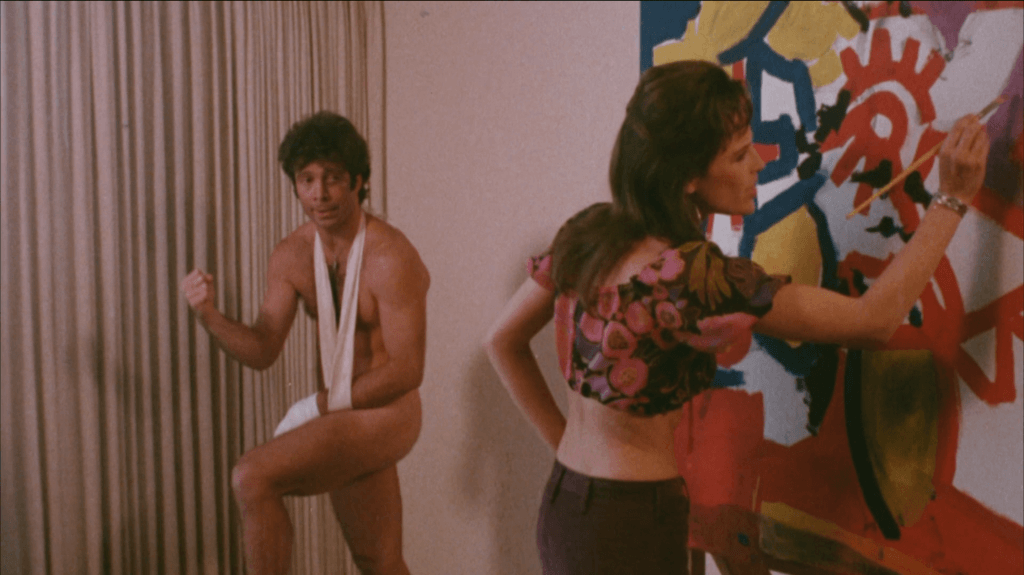
Our journey to get Rothman’s films back in cinemas has been a challenging one. Due to reasons beyond our control, it was not possible to access funding to tour the films and to bring Stephanie over to the UK to discuss her work, even though she was very keen. Nevertheless, we will be welcoming Stephanie on Zoom at Cinema Rediscovered on Thursday 24 July to reflect on her final (and most personal) film, The Working Girls (1974), a sexcapade comedy about three ambitious young women who use their wiles to navigate the job market. “I’ve always thought of it as being dedicated to the Equal Rights Amendment,” Rothman stated in her recent Guardian interview, adding: “A woman couldn’t get a bank account in her own name. I was a working woman, making my own living, and I couldn’t get a credit card!”

Still from The Velvet Vampire (1971)
This summer, the Barbican’s regular Hidden Figures strand, which celebrates filmmakers who, despite directing ground-breaking films, have been neglected in the canon of world cinema, has chosen to spotlight Rothman. We will be launching the strand with Terminal Island (1973), a cult favourite for exploitation cinema fans, in which Rothman brings sex and bloodshed to the screen with a provocative thriller that is also a biting commentary on the US justice system. After this screening, we will be joined by Rothman for a ScreenTalk via Zoom, where she will talk further about the film and her wider career. At present, The Velvet Vampire (1971), the second film Rothman made for Roger Corman, is the film igniting audiences’s interest the most. Here, Rothman deliciously subverts the conventions of exploitation cinema and creates the first truly feminist vampire movie, exploring the shifting values of the early 1970s as erotic tensions arise in the heat and the California Mojave Desert. As programmers, we are excited and curious to see how Rothman’s exploitation films will be received by audiences this summer. In recent years, it’s been a pleasure to watch fresh, provocative, subversive cinema by a new generation of female filmmakers steeped in B-movie, underground and exploitation cinema history and culture, including the films of Rose Glass, Julia Ducournau, and Coralie Fargeat. By bringing Stephanie Rothman back to our screens, we want young audiences to appreciate that Rothman was there first, as Bev Zalcock writes, “turning the base metal of trashy low-budget cinema into pure gold.”
We are grateful to the feminist film collective Invisible Women, who collaborated with us on an earlier iteration of this project. Organising these screenings has led to new writing on Rothman’s work, which is crucial in reaching new audiences in the UK as well as creating further discourse around Rothman’s films and legacy. New commissions include a recent interview with Stephanie Rothman for The Guardian, written by Rachel Pronger of Invisible Women, and additional content for press outlets due to be published in August. Lastly, we would also like to share writer/critic Anahit Behrooz’s new piece on Letterbox commissioned by Cinema Rediscovered. We hope to see some WFTHN members and readers of this blog at the screenings!
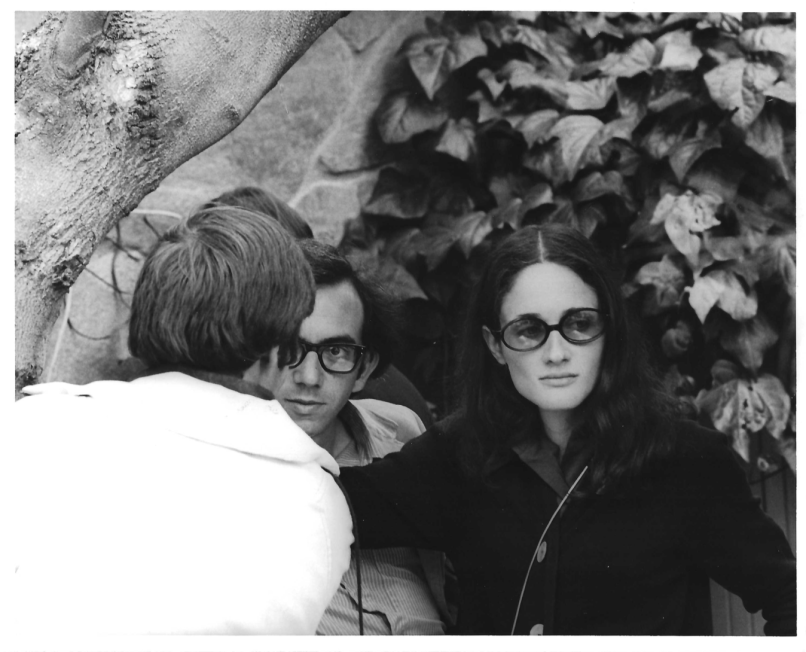
Shot on location of The Student Nurses (1970). Rothman with her husband Charles Swartz and, facing away, production manager Paul Rapp. Image credit: Stephanie Rothman.
 WFTHN
WFTHN 