By Dr. Pete Kirkpatrick
In my PhD, I identified how the representations of mental illness in biopics produced with major Hollywood studio involvement often followed a specific formula. The stages of this formula included a specific incident in the subject-matter’s life being established as the cause of their struggles with depression, anxiety or PTSD; the subject becoming addicted to alcohol and/or drugs in their attempts to cope with those struggles; and the film concluding with a resolution to those struggles and the subject embarking on a fresh start, or at the very least feeling much more optimistic about the future. Post-2000 biopics that feature this formulaic representation include Ray (2004), Walk the Line (2005), Bohemian Rhapsody (2018), Judy (2019), Rocketman (2019), The Eyes of Tammy Faye (2021) and Respect (2021).
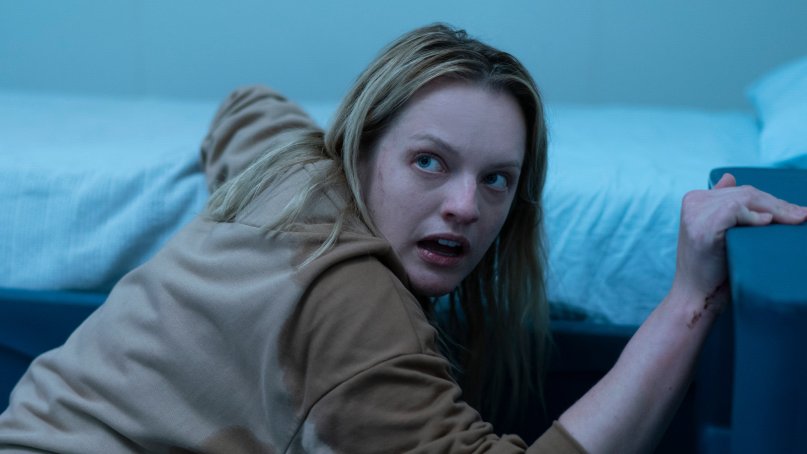
This more straightforward representation of mental illness in Hollywood cinema can also be identified in multiple horror films from the late-2010s/early-2020s, including the Halloween reboot trilogy (2018-2022), It: Chapter Two (2019) and The Invisible Man (2020). All of these films’ protagonists – female and male alike – have trauma struggles that are rooted in particular situations from their pasts that involved specific individuals, for which they haven’t sought professional help. Instead, they all eventually determine that they can only end their trauma struggles by killing the person responsible for them – and in each case, their successfully doing so is indeed depicted as the point where they find closure. Despite having faced perilous situations and witnessed others being murdered, once the culprits have been killed, no suggestion is given to the possibility of the protagonists subsequently experiencing PTSD, rather they’re shown to be happily embarking on fresh starts. This omission is most apparent in Halloween Ends (2022), as Laurie Strode (Jamie Lee Curtis) was established to have been struggling with untreated PTSD for 40 years at the start of Halloween (2018). As such, these Hollywood films all feature formulaic representations of trauma that end conclusively, in so doing fulfilling tropes of the Classical Narrative formula. A term first coined by David Bordwell, he identified this formula as one that’s been commonly used in Hollywood filmmaking since the silent era, and such films will usually conclude with a happy ending that involves decisive victory or defeat, a resolution of the main problem, and a clear achievement or non-achievement of the protagonist’s goals.[1]

The formulaic nature of this representation is made further apparent when these films are juxtaposed with two female-directed, British independent horror films from 2021 – Censor and She Will. Censor is set in 1985 during the video nasties boom, and the main character is film censor Enid Baines (Niamh Algar), who aims to protect children from the most potentially-traumatising film content in an era where access and viewing have been revolutionised by video technology. A dinner scene with her parents establishes that she has repressed trauma from her childhood, as she’d witnessed her sister Nina’s disappearance 20 years earlier, and she’s forced to revisit those memories when her parents announce that they’ve had Nina declared legally dead in order to find closure. Enid’s visible pain and guilt as she recalls those events also suggest a correlation between her childhood and her work, implying that her ongoing efforts to protect children from horrifying film content are an attempt to atone for her perceived failure to keep Nina safe.
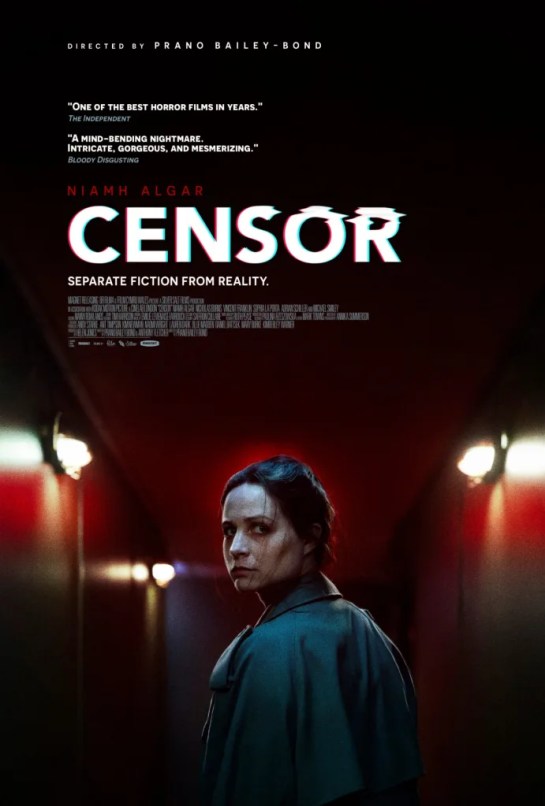
Refusing to accept the likelihood of Nina’s death, Enid later becomes convinced that an actress (Sophia La Porta) in a video nasty is the adult Nina. Believing that she now has a chance to atone for her perceived past mistakes and find closure on historic trauma, she eventually locates “Nina” on a set and rescues her from her “kidnappers”, killing a would-be-attacker in the process, before reuniting her with their overjoyed parents. The final moments, however, reveal that the rescue and subsequent happy reunion are a fantasy within Enid’s head, and that she has in fact killed an innocent man and kidnapped the actress Alice Lee, who’s now begging Enid’s stunned parents for help. By ending the film here, director/screenwriter Prano Bailey-Bond left it ambiguous as to what consequences Enid would face, what psychiatric help she would go on to receive, and whether she’d ever find closure for her childhood trauma.
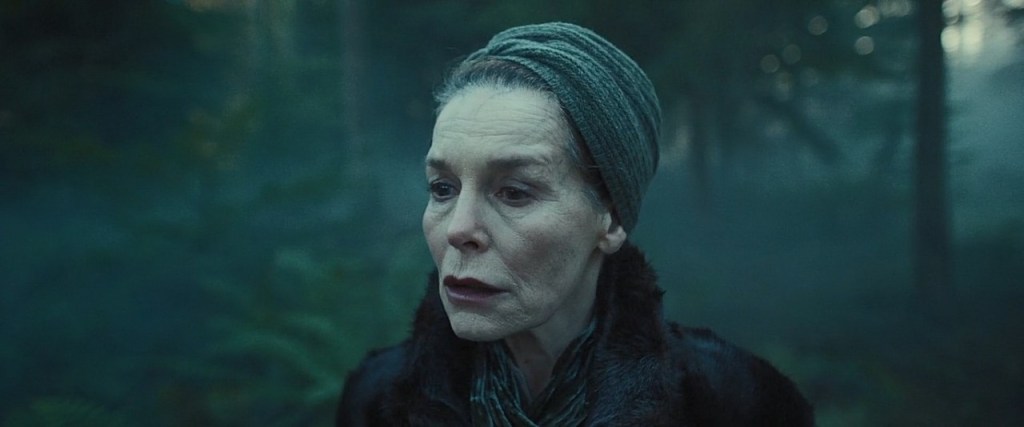
Ambiguity is something that Censor has in common with She Will. In the latter film, when the protagonist – retired actress Veronica Ghent (Alice Krige) – is first introduced, she’s visibly depressed and, after arriving at a healing retreat in rural Scotland, becomes anxious when others try to speak to her. The fact that she’s come to the retreat following a double-mastectomy strongly implies a correlation between her physical health and her mental wellbeing, although it’s never clear whether other factors inform her social anxiety. Whereas Hollywood biopics and horror films alike frequently establish a single cause for the protagonist’s struggles with mental illness, Veronica’s become increasingly multi-faceted as she’s later revealed to also have repressed trauma from decades earlier, when she was abused as a child actress by director Eric Hathbourne (Malcolm McDowell), the memories of which she’s forced to relive by the news that he’s remaking the film on whose set he’d abused her.
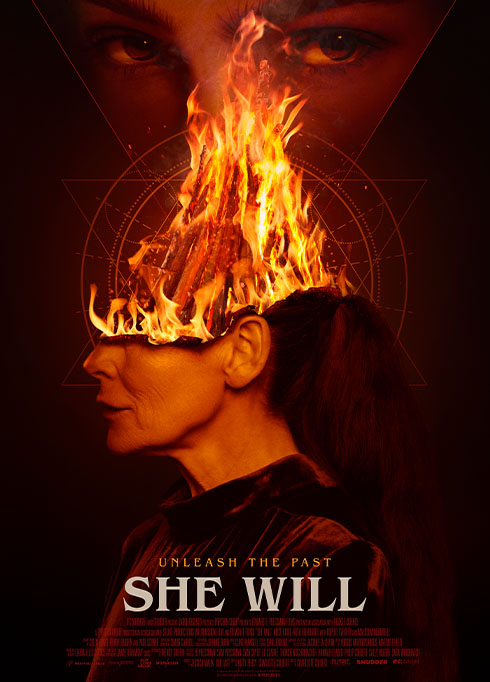
Although Veronica decides to seek closure for her childhood trauma through the same means as the protagonists of the aforementioned Hollywood horror films, in telling how she does so, director Charlotte Colbert and her co-writer Kitty Percy embraced the fact that audiences don’t have the same expectations of realism with horror films as they do with biopics. The rural retreat is established to be at the location of the witch burnings that occurred centuries earlier, and through physical contact with the ground upon which the burnings took place, Veronica gains supernatural abilities. With these new powers, she makes a vision of her younger self (Layla Burns) appear to Hathbourne and confront him about his past behaviour from a distance – an encounter that leads to his death and which she’s able to execute without physically leaving her bed. In so doing, she’s able to confront the cause of her childhood trauma discreetly and from a safe distance – indeed, subsequent news headlines announce that his death has been ruled a suicide – and she’s shown to find closure on those memories. However, this does not necessarily mean that Veronica’s mental illness struggles are over. At multiple points throughout the narrative, she’s shown to be devastated by and struggling to come to terms with the physical changes caused by her recent surgery, and whilst the burden of her childhood trauma has been lifted by Hathbourne’s death, both her state of mind concerning her physical wellbeing and the degree to which she continues to struggle with social anxiety are left unclear.
For both Censor and She Will to end with, at the very least, a degree of ambiguity is a marked contrast to how the representations of mental illness in Hollywood horror films and biopics alike often end conclusively, and is also demonstrative of their production contexts. Both films were produced in Britain and without any involvement from Hollywood, meaning that the women who made these films were free from expectations to conform to the Classical Narrative formula, and therefore did not face requirements for happy endings. As such, with Censor and She Will, Prano Bailey-Bond and Charlotte Colbert were respectively able to create much more complex and multi-faceted representations of this difficult subject-matter than the men who made the Halloween reboot trilogy, It: Chapter Two and The Invisible Man could, resultantly making the formulaic and more straightforward nature of those in the Hollywood films much more apparent. Additionally, these female-directed horror films are therefore demonstrative of Geoff King’s argument that freedom and departure from the Classical Narrative formula is a key identifying feature of independent filmmaking.[2]
Dr. Pete Kirkpatrick is an early career researcher, who studied for his PhD at Kingston University. His thesis, ‘Based on a True Story: Framing the Present through Depictions of the Past in Post-2010 Biopics and Historical Films’, addresses the relationships between those genres and the contemporary socio-political climate, and considers how issues concerning race relations, gender equality, mental illness and displacement were represented in biopics and historical films post-2010. In addition to those genres, Pete’s research interests include the film and media industries’ relationships with politics and society, film history, and contemporary British and American cinema.
[1] Bordwell, D. (1985) Narration in the Fiction Film. Oxon: Routledge.
[2] King, G. (2005) American Independent Cinema. London: I.B. Tauris.
 WFTHN
WFTHN 
One response to “Narrative Formulas and Production Contexts: Representations of Trauma in Post-2015 Female-Led Horror Cinema ”
[…] who have done some fantastic scholarship. In addition to presenting at the conference this year, I recently wrote this piece for their blog, in which I analysed how representations of trauma in pos…, using a variety of Hollywood and British independent films as case […]